Monday, 12 March 2007

Kerala Toddy = Kallu = Palm Wine

Kerala Toddy = Kallu = Palm Wine
dominic savio fernandez


Kallu tastes exactly the way "neer more" (dilute buttermilk) would taste if it gets a little too sour. Kallu in my opinion tastes very good with a bland sour taste and smells the same way the over sour butter milk would smell,
not too pungent though.


The problem with kallu is that it has a very short shelf life, stocks arrive in the morning and must be sold by evening otherwise they get spoilt. So the toddy shop guys take limited stocks per day based on sales average and when sales suddenly go high and the stocks deplete they dilute the kallu and add chemicals (tablets) to compensate for the diluted liquor which gives undesirable effects. So it is always advisable to take an expert hand along who can taste the stuff to determine whether the stuff is good or not before the rookies try drinking it. Fortunately for us we had a worker from the estates who came along with us to do the testing
and he gave us the green signal.

The toddy shop served kappa curry (kappa is a root like potato), beef intestines (tasted great! I know some are puking now) and also boiled eggs. These side dishes went so well along with the kallu.

Coconuts in Kerala S.india

The coconut tree is an integral part of the
landscape of Kerala.


The coconut tree is an integral part of the landscape of Kerala. On Kerala tours with Kerala Backwater, you will be wonderstruck by the green landscape covered with coconut palms, their green fronds swaying in the breeze. Coconuts in Kerala are an essential part of the lifestyle of Kerala, they are also an important part of the
cuisine of Kerala.


Coconut trees are essential to the traditional lifestyle and livelihood of the people of Kerala, as you will see when you travel on Kerala tours with Kerala Backwater.

Kathakali - the dance drama from the south Indian state of Kerala


The Demon and Bhima
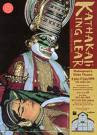
Kathakali is the most well known dance drama from the south Indian state of Kerala. The word Kathakali literally means "Story-Play". It is known for its large, elaborate makeup and costumes. The elaborate costumes of Kathakali have become the most recognised icon for Kerala.
The Demon and Bhima
The themes of the Kathakali are religious in nature. They typically deal with the Mahabarat, the Ramayana and the ancient scriptures known as the Puranas. This is performed in a text which is generally Sanskritised Malayalam.

Bhima
A Kathakali performance is a major social event. They generally start at dusk and go through out the night. Kathakali is usually performed only by men. Female characters are portrayed by men dressed in women's costume. However, in recent years, women have started to become Kathakali dancers.


The Brahmin and Bhima

Kathakali has a long tradition. It dates back to the 17th century. It was given its present form by Mahakavi Vallathol Narayan Menon, who was the founder of the Kerala Kala Mandalam.

Makeup time

The costume is the most distinctive characteristic of Kathakali. The makeup is very elaborate and the costumes are very large and heavy.


Makeup time

There are several kinds of costume. There are: Sathwika (the hero), Kathi (the villain), Minukku (females), and Thatti. These basic divisions are further subdivided in a way which is very well known to Malayali (Keralite) audiences. Each character is instantly recognisable by their characteristic makeup and costume.

Incredible Kerala - Originally a traditional form of martial arts

Kalaripayattu An overview of the style, history and training method


Kalaripayattu the martial art form of Kerala is reagarded as the oldest and more scientific in the world.

Training in combat is given at the kalari (training school). The principles of kalari education stipulate that training in martial art begins with an oil massage of the body which goes on until the body is agile and supple. Feats like chattom (jumping), ottam(running), marichil (somersault) etc. are then taught, followed by the lessons the use of weapons such as daggers, swords, spears,maces,the bow and arrow and so on. Kalaripayattu training aims at the ultimate co-ordination of the mind and body.

The traditional training in a kalari includes specialisation in indigenous medical practice too. Kalaris are also centers of religious worship. The general guidelines to be followed in kalaripayattu demand that once the course is complete, a person should undergo oil massage and engage in the practice of the feats atleast once a year to help him keep in shape.


Sunday, 11 March 2007

Kerala - God's Own Country


Kerela has a 600 km long shoreline dotted with some of the finest, most charming beaches of the world, coconut groves, natural harbors, lagoons and sheltered coves. All of it as peaceful as the rest of the land, washed by the pleasant tropical sun and as pristine as ever.

Kovalam beach :
This internationally renowned beach resort of Kerela has been a favorite haunt of tourists since the 1930s. Kovalam consists of three adjacent crescent beaches. The southernmost , known as the Lighthouse beach, is the most popular, Kovalam offers accommodation options to suit all the budgets.

Poovar Beach :
Poovar is an unspoilt and unexplored island, envoloped by the most serene backwaters, and opening out to the sea and a dream golden sand beach.

Shanghumugham Beach :
This is a favorite haunt of sunset viewers. The beach is adjacent to the Thiruvananthapuram (Trivandrum) airport and Veli Tourist Village.


The Varkala Beach :
Vakala is a seaside resort and spa, as well as an important Hindu centre of pilgrimage. High cliffs with rich mineral springs rise majestically from the coastline. The 2000 year old Sree Janardhana Swamy Temple and the Nature Care Centre are the two main attractions there

Alappuzha Beach :
This is one of the most popular picnic spots in alappuzha. The pier, which extends into the sea here, is about 140 years old.
Cherai Beach - This lovely beach bordering Vypeen island is ideal for swimming. Dolphins are occassionally seen here.
Fort Kochi Beach - The town was shaped by the Portuguese, the Dutch and later the British..


Kappad - This is the historic beach where Vasco da Gama landed on the 27th of May, 1498 with 170 men in three vessels. The rock studded beach is locally known as Kappakadavu. An interesting feature of the landscape is the sprawing rock that protrudes into the sea. The temple on the rock is believed to be 800 years old

Kerala Houseboats [Luxury category]


A Cruise along the palm fringed waterways of Kerala in a luxury houseboat or ketuvallom is the most enchanting holiday experience in India today. In this world of simple pleasures, you'll skim past ancient chinese fishing nets, water lillies, lush paddy fields, coir villages, rustic homes, temples and coconut groves.

Innumerable lagoons, lakes, canals, estuaries, and te deltas of forty-four rivers make up the 900 km backwater network of Kerala. The backwatrs mainly covers the four districts of the state - Kollam, Alleppey (alappuzha), Kottayam and Kochi ( Cochin ).

The largest backwater body, the Vembanad lake flows through Alleppey (Alappuzha) and Kottayam districts and opens out into the sea at the Kochi (Cochin) Port. The Ashtamudi Lake, the second largest backwater stretch, offers the longest ride and is considered the gateway to the backwaters.

Your holiday home in this tranquil world is the comfortably furnished houseboat or ketuvallom.

The Houseboats or Kettuvalloms of Kerala are giant country crafts, measuring up to 80 foot in length, retrieved from being lost to the State altogether.
Once these Rice Barges ruled the backwaters, poled along by one or two men, heavily loaded with rice, coconut and other commodities. But in the recent times, the ketuvalloms or houseboats have been replaced by more and modern modes of transport, relegating them to neglect and decay


Kerala Hill Stations


Kathakali. Dramatic! Peopled with character types; fantastic make-up and costumes


a story play or a dance drama. Katha means story. Belonging to the South-Western coastal state of Kerala, Kathakali is primarily a dance drama form and is extremely colourful with billowing costumes, flowing scarves, ornaments and crowns. The dancers use a specific type of symbolic makeup to portray various roles which are character-types rather than individual characters. Various qualities, human, godlike, demonic, etc., are all represented through fantastic make-up and costumes.

The world of Kathakali is peopled by noble heroes and demons locked in battle, with truth winning over untruth, good over evil. The stories from the two epics, the Mahabharata and the Ramayana, as well as the Puranas constitute the themes of the Kathakali dance dramas.

The macro and micro movements of the face, the movements of the eyebrows, the eyeballs, the cheeks, the nose and the chin are minutely worked out and various emotions are registered in a flash by a Kathakali actor-dancer. Often men play the female roles, though of late women have taken to Kathakali.


The pure dance element in Kathakali is limited to kalasams, decorative dance movements alternating with an expressional passage where the actor impersonates a character, miming to the liberetto sung by the musician. A cylindrical drum called chenda, a drum called maddalam held horizontally, cymbals and a gong form the musical accompaniment, and two vocalists render the songs. Using typical music known as Sopanam, Kathakali creates a world of its own.


The most striking feature of Kathakali is its overwhelming dramatic quality. But its characters never speak. It is danced to the musical compositions, involving dialogues, narration and continuity. It employs the lexicon of a highly developed hand-gesture language which enhances the facial expressions and unfolds the text of the drama.


Incredible kerala tourism


Fascinating Kerala


kerala wildlife


Kerala Tourism